3D architectural visualization: when the project comes to life before it’s built
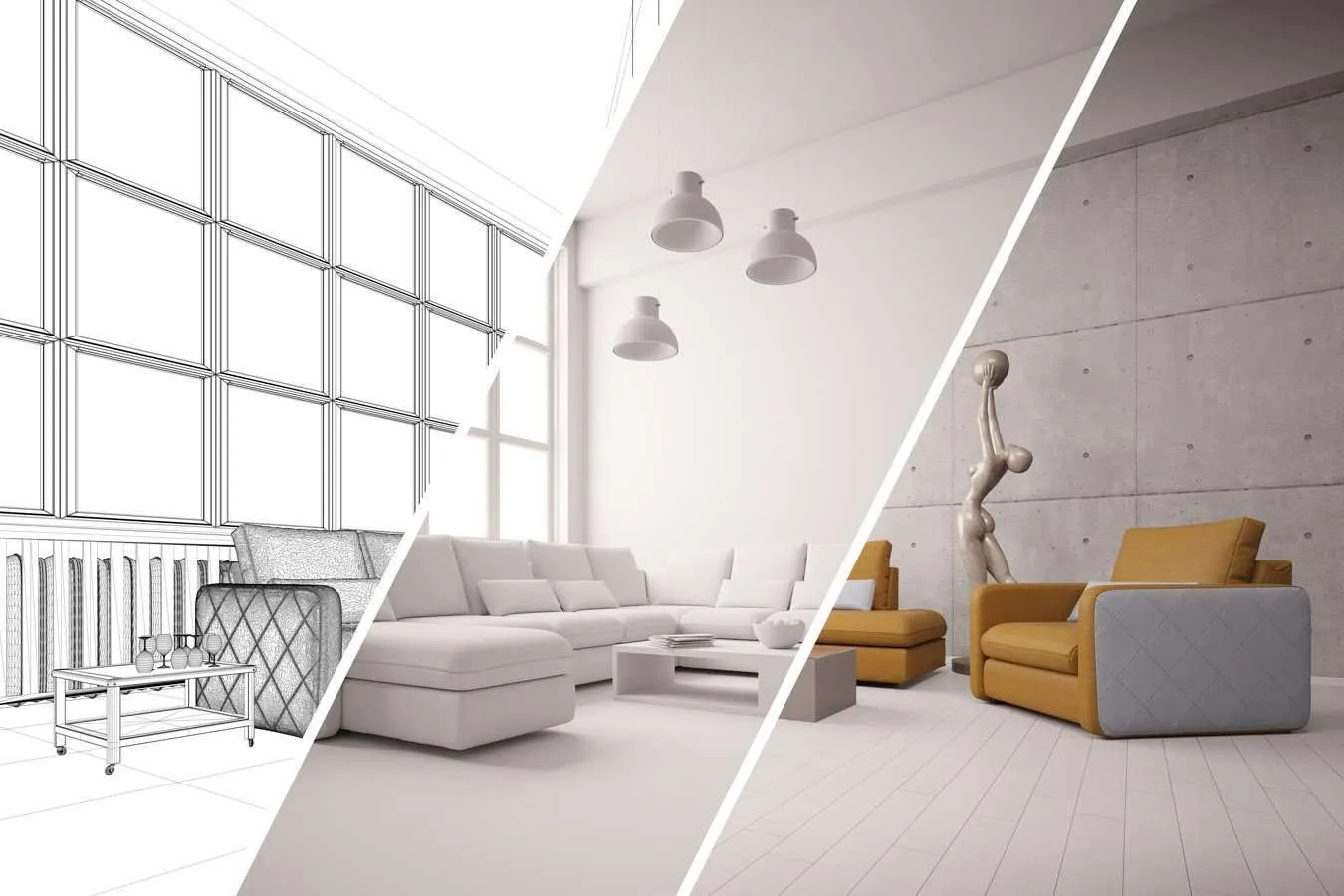
A building that doesn’t exist yet can now be photographed. Well, almost. That’s exactly what 3D architectural visualization makes possible — producing images of such precision and realism that it becomes hard to tell the computer-generated render from a photograph of a finished building. For architects, developers, and everyone who carries construction projects forward, it’s a profound shift in how we design, communicate, and convince.
Before 3D: the age of plans and sketches
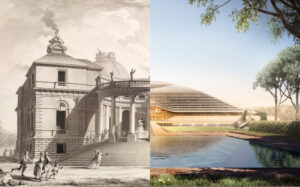
For centuries, architects communicated with abstract tools. Dimensioned plans, sections, elevations, hand-drawn perspectives — representations that require specific training to read and interpret. The non-specialist client had to trust, imagine, project. This gap between the designer’s vision and the client’s understanding was the source of countless misunderstandings, blind decisions, and sometimes disappointment on delivery.
The first physical models partially bridged that gap, but they remained expensive, fragile, and unable to convey the materials, light, or atmosphere of a space. Hand-drawn perspective, however talented, inevitably carried a degree of artistic subjectivity that sometimes drifted away from the project’s future reality.
What 3D visualization changed
The arrival of 3D modeling and rendering software in the 1990s, then its gradual democratization in the 2000s, opened a new era. For the first time, it became possible to build a building virtually before building it physically — and to produce images legible to everyone, with no particular technical training.
Today, tools like 3ds Max, SketchUp, Rhino, or D5 Render let you model a project with millimeter precision and render it under lighting, material, and contextual conditions that mimic physical reality with remarkable fidelity. Real-time rendering, in particular, has dramatically shortened production times — making these tools accessible to studios of every size, for projects of every scale.
A revolution in architectural communication
3D visualization doesn’t replace technical drawings — it complements them by speaking to a different audience. Where the plan speaks to the engineer and the construction firm, the photorealistic render speaks to the client, the investor, the local official, the competition jury. It translates an architectural intent into an immediate visual experience, with no effort of interpretation.
This ability to make the project accessible to all its stakeholders has concrete consequences for how projects unfold:
- Decisions are made earlier and more calmly — the client signs off on materials, volumes, and atmospheres before the build starts, which cuts the costly back-and-forth during execution.
- Sales start before delivery — for real-estate developers, 3D renders make it possible to launch off-plan sales with visuals that create desire, not just dimensioned drawings.
- Competition entries are better defended — a submission illustrated with polished renders communicates not only an architectural proposal but also the ability to master and showcase it.
Research led by players such as Autodesk on the sector’s digital transformation confirms that 3D visualization significantly reduces the gap between design intent and the result perceived by the end client.
From photorealism to immersion
3D architectural visualization no longer stops at the still image. It has gradually extended toward more immersive formats — cinematic animations, 360° panoramas, interactive virtual tours, virtual-reality experiences. Each format answers a specific communication need, and the line between computer image and interactive experience is fading more and more.
This continuum — from the 2D plan to the still render, from animation to virtual tour — now traces a genuine ecosystem of visual communication in service of the architectural project. The specialized studios that master this entire chain offer their clients a coherence and efficiency that fragmented approaches can’t reach.
When should you turn to 3D visualization?
The short answer: as early as possible. Many clients wait until they have a near-final project before commissioning renders. That’s often a mistake — visuals produced too late serve to communicate, but no longer to decide. Integrated from the upstream phases, 3D visualization becomes a working tool: it helps test variants, weigh material options, and spot composition problems before they become irreversible.
For developers, the right window is often the building-permit filing — the plans are stable, the project is sellable, and the visuals can accompany the commercial launch. For architects in a competition phase, renders should be planned from the moment the submission is assembled, not added at the last minute.
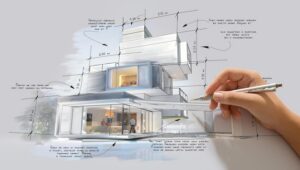
Parallax Stud.io: from design to visual communication
At Parallax Stud.io, we work at every stage of the project — from concept exploration in the sketch phase to final communication visuals. Our approach combines technical rigor with architectural sensibility, anchored in real-time rendering tools that let us produce high-quality images within controlled timeframes.
If you’d like to give your project the visual representation it deserves, contact us to discuss your needs.
Parallax Stud.io is a French-Moroccan architectural visualization studio based in Rabat. We help developers, architects, and real-estate agencies bring out the visual value of their projects.